
Open Source software: what does that mean?
Definition
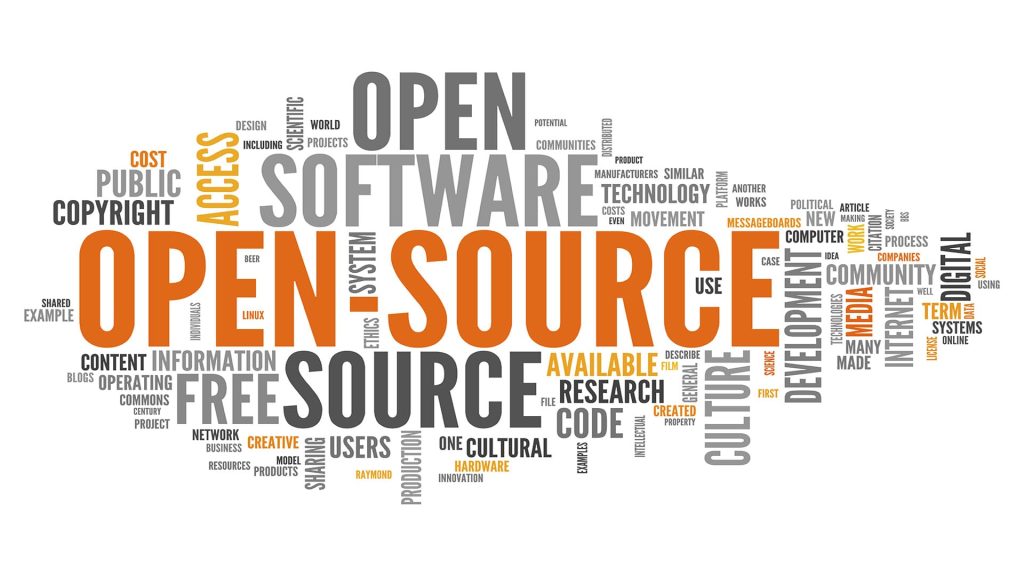
Open Source software is a computer software whose source code is freely accessible, editable and redistributable. Collaborative development and knowledge sharing are usually associated with Open Source communities.
One of the main differences compared to proprietary software is that the latter’s source code is “closed”, meaning users cannot access it. You pay for the right to use the tool as-is, without visibility into its inner workings.
To illustrate: Microsoft Windows is proprietary software, while RedHat Enterprise Linux is Open Source — both widely used in companies today.
Open Source Initiative
The non-profit organization Open Source Initiative defines 10 principles that must be met for software to qualify as Open Source:
- Free distribution: anyone can sell or distribute the software with no mandatory fee.
- Accessible and readable source code.
- Modifications and derived works allowed, under the same license.
- Integrity of the author’s source code (patch distribution allowed).
- No discrimination against individuals or groups.
- No discrimination against fields of activity.
- Rights must apply equally to all users.
- License not tied to a specific product.
- No restrictions on other software distributed with it.
- Technology-neutral license.
Open Source: what are the benefits?
86% of IT leaders say the most innovative companies use enterprise open source.
The State of Enterprise Open Source – Red Hat 2020
Transparency
Open source code ensures transparency, which strengthens quality and security. Bugs are more easily spotted and corrected thanks to the community.
More innovation
Open collaboration accelerates time-to-market, reduces costs, and improves software quality. Open Source has become essential for fast, sustainable innovation.
Cost
While not “free”, the Total Cost of Ownership is usually lower than proprietary alternatives.
Freedom and sustainability
Using an Open Source software reduces vendor lock-in and enables customisation. You also benefit from community contributions that drive continuous innovation.
Free software vs Open Source software
These notions are often confused. Are they the same? Not exactly — here’s why.
From Free to Open Source
In 1998, the Open Source Initiative was created to adapt free software to commercial usage, giving birth to the term “Open Source”.
Richard Stallman explains the difference as follows: free software is a social movement, while Open Source is a development methodology.
4 freedoms of free software
Founded in 1985, the Free Software Foundation (FSF) states 4 essential freedoms:
- Freedom to use the software
- Freedom to study it
- Freedom to modify it
- Freedom to redistribute it
These freedoms prioritize user control and transparency — fundamental principles of the FSF and the GNU project.

Different types of software licenses
There are four main categories of free software licenses:
- Public Domain: completely permissive.
- Permissive licenses (Apache, BSD, MIT): few restrictions, preservation of authorship.
- GNU GPL: strong copyleft; modified versions must remain free.
- Copyleft: allows modification and redistribution, requiring derived versions to also be free.
Differences
A free software is always Open Source, but an Open Source software is not always “free” according to the FSF. Free software includes ethical and political values, whereas Open Source is more focused on the technical development model.